What is Gynecomastia?
What is gynecomastia and how is it distinguished from chest fat?
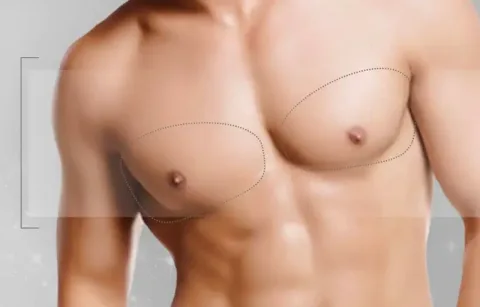
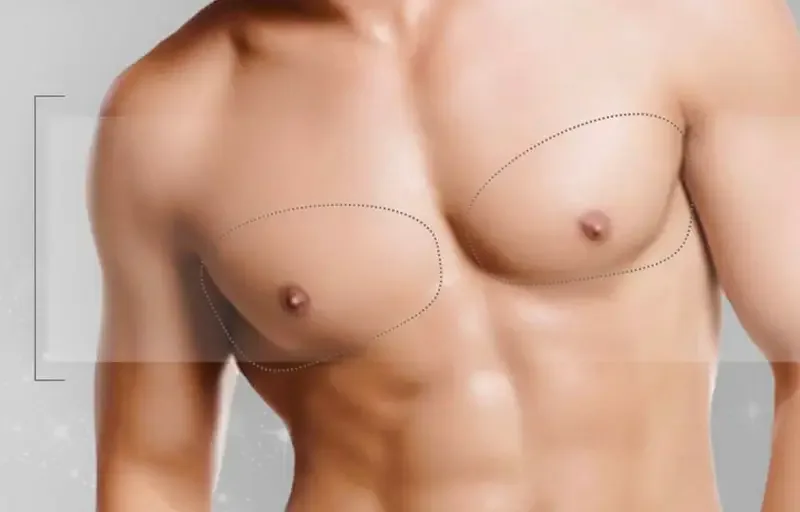
A fuller appearance of the chest does not, by itself, indicate that all tissues have enlarged in the same way. Gynecomastia describes an increase in the breast glandular tissue. Pseudogynecomastia refers to an appearance related more to fat accumulation than to an increase in glandular tissue. One or both sides can be affected; the sides do not have to look identical. The Mayo Clinic explanation of gynecomastia defines this distinction. Rather than trying to determine which tissue is dominant from a mirror or a photograph, assessment should be made during an examination.
The importance of this distinction is not only terminological. While a person seeks a change in chest contour, it is necessary in the consultation to investigate the cause and understand which tissue will be addressed. A request starting with “I want to remove fat” may be discussed with a different scope after examination. Conversely, gland excision is not planned for everyone who is bothered by the appearance. First cause and tissue, then method provides a clearer decision framework. You do not need to repeatedly self-diagnose your chest or try to fit it into online classifications.
What can cause it, and why is evaluation performed first?
Hormonal changes, certain medications, anabolic steroid use and various medical conditions can be associated with breast enlargement. It can also be seen during puberty. The NHS gynecomastia guide explains that some cases may not require treatment and that addressing underlying causes is important. Therefore, the statement “Gynecomastia is only cured by surgery” does not accurately describe every situation. Do not stop a prescribed medication on your own because you suspect it causes enlargement; discuss this with the physician who monitors you.
Investigating the cause is not to dismiss your cosmetic concern. It helps to understand what change can be targeted with surgery and whether additional medical evaluation is required. In the consultation, clearly describe when the change started, how it has progressed, and your use of medications or supplements. This information is requested not to judge you but to make an accurate assessment. The fact that a product is advertised as “natural” does not mean you should omit its name from the list of things you use; share the exact names of what you use.
Which symptoms should not be left to purely cosmetic discussion?
If there is persistent pain in the breast or nipple, a palpable mass, skin changes, or discharge or bleeding from the nipple, a medical evaluation should be sought. These findings should not be labeled as gynecomastia based only on an internet article. The NHS lists these as symptoms that should be discussed with a physician. Enlargement can sometimes be unilateral; merely counting sides is not sufficient to understand the cause. Your request for aesthetic change and the need to evaluate a new symptom may be two separate needs.
When requesting a consultation, describe your complaint briefly and accurately: how long it has been present, which side, whether it changes over time and whether there are accompanying symptoms. You do not have to share these details publicly in comment sections or on social media. Use appropriate consultation channels for health information. This guide does not aim to make a personal diagnosis or to minimize symptoms. Instead of assuming a new finding is only a “cosmetic problem,” have your healthcare team evaluate it.
Examination, tests and treatment goals
During the examination general health, medical history, allergies, medication and supplement use, previous surgeries and expectations are discussed. When investigating the cause of breast enlargement, tests, hormonal evaluation and measurements may be planned if necessary. Skin quality, the position of the nipple and areola are also examined. The ASPS consultation guide explains that not only the surgical technique but also the underlying cause should be evaluated. You can ask which tests are requested and why; this page does not recommend the same test package for everyone.
Describe your aesthetic goal in separate terms such as discomfort within clothing, prominence around the nipple, or overall chest contour. Explain what “completely flat” means to you. It is important that your surgeon respond about the expected natural contour, differences between sides and how the skin will be managed. Note any points you want to ask about regarding muscle structure, chest wall or other personal features. Do not assume another person’s photograph guarantees your result.
Liposuction, glandular tissue excision and skin adjustment
When fat tissue predominates, liposuction may be considered. When excision of glandular tissue or excess skin is required, surgical removal techniques may be indicated; in some cases these approaches are used together. The ASPS procedural steps clarify the distinction between fat reduction and tissue excision. Liposuction uses a thin cannula to remove fat tissue; glandular excision is not the same procedure. Which component is planned for which purpose should be explained during the examination.
Excess skin or areola position also affects the scope of the plan. For this reason it is not correct to describe all gynecomastia procedures as “done through two small holes.” The Liposuction guide helps you understand the general goals of fat removal; it does not show that the same plan will be applied to your chest area. When you encounter a device name, first ask about the tissue target. A technology name is not evidence that every type of breast enlargement can be corrected by fat reduction alone.
One procedure name, different surgical objectives
| Plan topic | Primary objective | Question for the consultation |
|---|---|---|
| Fat reduction | Regional fat tissue | Were glandular tissue and skin also evaluated separately? |
| Glandular tissue excision | Breast glandular tissue | Why is this method recommended, and where is the incision? |
| Skin adjustment | Excess skin and position | Has the scar plan and areola target been explained? |
| Combined approach | Multiple tissue types | Which complaint does each stage address for me? |
Does every case of gynecomastia require surgery?
No. Surgical options are discussed after the cause and other evaluations are understood. ASPS considers factors such as cases not amenable to alternative medical approaches, general health, stability of development and realistic expectations. The ASPS candidacy explanation treats the decision for surgery on an individual basis. Being bothered by your chest appearance is a sufficient reason to seek evaluation; it does not mean you must decide for surgery immediately.
Timing is especially important for changes during adolescence; if development is ongoing, subsequent appearance may change. Age or a stage you found online is not, by itself, a decision criterion. Do not view the first consultation as a step where you must set an operation date. After evaluation, follow-up, referral to another specialist or discussion of surgical options may follow. Ask the recommended sequence and its rationale. This way it is clearer on what information the recommendation to wait, investigate further, or proceed is based.
Exercise, weight change and non-surgical methods
Distinguishing the contribution of fat from glandular tissue helps answer the question “Will exercise resolve it?” more accurately. The proportions of fat and glandular tissue are not the same; based on appearance alone, it is not possible to promise definite correction with exercise or a single product. Weight status, usage history and the cause of enlargement should be considered in their own evaluation. The NHS notes that in appropriate cases weight management or medical approaches to underlying causes may be discussed; these are not options to be prescribed without a personal examination.
Ask exactly what is being targeted when offered a service described as “non-surgical gynecomastia.” If a method targets fat tissue, its limits regarding glandular tissue and skin must also be explained. Do not consider a cream, device or exercise program equivalent to surgical tissue excision. Do not choose a supplement or hormone-related product based on social media recommendations. Discussing health evaluation together with cosmetic expectations is the way to understand which options are truly relevant to your situation.
Preparation: medications, products and accompaniment
Preoperative tests, medical evaluation, medication adjustments and smoking cessation may be discussed. Return home arrangements and first night support should also be planned. The ASPS preparation guide emphasizes clear sharing of health and lifestyle information. Do not stop medications based solely on this text; clarify the plan with your own physicians. State the names of the products you use, how long you have used them and any previous procedures during the consultation. Missing information can affect not only the day of surgery but also the assessment of the cause.
You can write practical preparations as a timeline: what is required before the procedure, transport, accompaniment, the first check and daily support. If your job involves heavy lifting, driving or intensive arm movements, state this. Asking for care instructions in an understandable way is not a sign of inadequate medical knowledge. You need to understand what the instructions mean. Learn the procedure site, anesthesia, discharge plan and the person to contact in case of problems separately; simply being given a reservation time does not indicate preparation is complete.
From cause to outcome: the evaluation flow
Describe the change
Share the onset time, side, accompanying symptoms and product use.
Assess cause and tissue
After necessary examination and tests, learn the targets for fat, gland and skin.
Clarify scope and care
Discuss incision, compression garment, accompaniment and follow-ups according to your personal plan.
Continue follow-up
Do not consider early swelling the final result; assess appearance and any new symptoms with the team.
Compression garment and recovery after gynecomastia
After the procedure, dressings, bandages or a support garment may be recommended; in some plans a temporary drain may be used. The manner of using the support garment, wound and drain care, medications and follow-up timings are determined by personal instructions. The ASPS recovery guide emphasizes adherence to follow-up appointments and the personalized recommendations given. A garment model or duration seen online is not the same care plan for everyone.
Ask separately about when the garment will be removed, showering, sleeping, driving and return to sports. Saying “I feel fine” does not mean you can resume all activities. Conversely, another patient’s long rest period does not determine your timetable. Be explicit about chest exercises and physically demanding work. If a step in your plan is unclear, ask why. Do not change drain or bandage care on your own; use the contact method specified in your personal care instructions.
Scars, chest contour and evaluating results
Surgical procedures require incisions. Scar location varies with the scope; although some are placed in natural transitions, invisibility cannot be guaranteed. Appearance changes as swelling decreases and tissues heal. The ASPS results guide describes final evaluation as a process that unfolds over months; it notes that scars are permanent and that additional procedures may be needed in some cases. The first postoperative photo does not provide all information about outcome and durability.
Consider timing, posture and lighting in before-and-after images. The shape around the nipple, overall chest contour and the relationship between the two sides can be evaluated separately. Communicate your concerns to the team with a concrete observation: which side, which appearance and since when? Do not label every difference in a photograph yourself. Comparing the observed changes during follow-up with the goals discussed at the outset is more meaningful than using another person’s body as the sole benchmark.
Risks and the possibility of recurrence
Gynecomastia surgery carries risks such as bleeding, hematoma, infection, fluid accumulation, wound healing problems, scarring, asymmetry and contour irregularity. There may be temporary or permanent changes in nipple or chest sensation, and complications related to anesthesia and clotting can occur. The need for additional intervention should also be discussed. The ASPS safety guide provides important points to avoid treating the procedure as a risk-free standard service. A personal risk discussion differs from reading a general list.
If factors such as contributing medications, steroid use or weight change are present, they may be reconsidered in long-term evaluation. Do not stop your prescribed medication to try to preserve results; discuss changes with your physician. The phrase “it will never change again” should not be given as a personal guarantee. Keep the warning signs and the contact number you are given. In case of an unexpected or serious problem, seek medical assistance rather than collecting answers from internet comments; do not wait for a text message reply in an emergency.
What scope should you ask about when researching gynecomastia prices?
Chest appearance can affect clothing choice or comfort in social settings for some people. You do not need to describe this discomfort in a belittling way. The ASPS gynecomastia explanation notes that the emotional impact of appearance can also be important. Surgery should not be presented as a solution that will eliminate all social concerns or definitely increase confidence. In consultation, describing your physical change goals and what worries you separately helps discuss expectations more clearly.
Comparing different plans that include fat reduction, glandular excision and skin adjustment under the same name can be misleading. Learn which scope the procedure location, anesthesia, follow-ups and any additional costs refer to. This guide does not present a verified clinic price list. The amount another person paid is not your quote. Requesting a written summary of the scope after consultation helps you understand what you are comparing. You can also ask why more extensive intervention is suggested or what the limits are of a less extensive recommendation.
Short list to take to the consultation
- When did the change start and which side is affected?
- Is there pain, discharge or a new mass?
- Have I shared medication, supplement and steroid use?
- Were fat, gland and skin targets explained separately?
- Do I understand the incision, scar and garment plan?
- Is follow-up and care communication provided in writing?
Frequently asked questions about gynecomastia
Can unilateral enlargement be gynecomastia?
One or both sides can be affected. However, do not automatically assume a unilateral appearance is gynecomastia. New findings and accompanying symptoms should be evaluated medically.
Is liposuction alone sufficient?
This depends on the tissue composition and the target. Fat reduction is not the same as glandular excision. Ask in the consultation why only this method or a combined approach is recommended.
Does a compression garment correct all irregularities?
A support garment may be part of the care plan; it does not guarantee correction of all contour issues. Direct questions about its use and appearance to your own team.
Will there be scars after the procedure?
There are scars from the incisions, and these vary with the scope. Placement in natural transitions does not mean they will disappear completely. Ask that the proposed scar locations be shown before the procedure.
Do I have to decide immediately after the consultation?
Gathering information does not obligate you to set an operation date the same day. Summarize the recommended plan in your own words: which causes were evaluated, which tissue will be addressed, what change is targeted and what limits were discussed. Turn unclear points into a separate question list. It is normal to ask the same question at a follow-up visit. Knowing a method name or a price does not mean you fully understand the care and expected outcomes. Base your decision on explained goals and your health assessment rather than on a rushed comparison.
The body area description can be used with a procedure exploration page. This tool is not a medical diagnosis or a suitability decision. This text is for general information; it does not replace examination, personalized treatment or postoperative care instructions.
What the procedure can address
Not every patient receives the same treatment; the points below may be considered together or separately, depending on the person:
- 01To assess breast tissue and chest contour, and to reduce excess tissue in appropriate patients. A completely flat chest, perfect symmetry or a guarantee against recurrence while the underlying cause persists cannot be provided.
Who may be a candidate?
Who may be a candidate?
The onset, duration, pain, weight changes, medications and use of hormones or supplements are questioned. A new firm mass, nipple retraction, discharge or unexplained unilateral change requires medical evaluation. Do not stop prescribed medications on your own.
This page does not diagnose gynecomastia. New breast complaints should be evaluated before planning a cosmetic procedure.
The process
Tissue type, excess skin and nipple position are addressed during the examination. The rationale for fat removal, tissue excision or a combined approach is explained. Questions about scars, anesthesia, required tests and evaluation of removed tissue are discussed. Untreated underlying causes may affect the result.
Results and realistic expectations
Chest contour is assessed as swelling subsides. Flattening, asymmetry or tissue irregularities may remain. Weight change or persistence of factors that triggered the enlargement can affect the outcome. Additional correction may be required.
Risks and limitations
Bleeding, hematoma, infection, fluid accumulation, noticeable scars and poor wound healing may occur. Permanent changes in nipple or chest sensation, contour irregularity and fat tissue loss can develop. Risks related to anesthesia, thrombosis and deep tissue injury should also be explained before surgery.