What is Blepharoplasty?
What changes does eyelid surgery address?
An expectation about the eye area often starts with the sentence “I look tired.” However, this appearance is rarely caused by a single structure. Creasing of the eyelid skin, lower lid bags or the position of the brow are different topics. The purpose of the initial consultation is to make this general statement more specific. Is the bothersome feature noticeable from the front, in profile, or in a particular facial expression? Describing your expectation in this way is a clearer starting point than choosing an operation name immediately.
The ASPS eyelid surgery guide lists reasons to evaluate excess upper lid skin, prominent orbital fat in the lids and lower lid bags. Surgery can be applied to the upper lid, the lower lid, or both. In some people excess upper lid skin can also affect the visual field. It is important to separate appearance-related expectations from functional complaints; an aesthetic procedure should not be assumed to necessarily improve vision.
Online you may encounter many different procedures under the heading “periocular rejuvenation.” That term does not describe a single surgical technique or the same outcome for everyone. In consultation, tell the surgeon not only what you want changed but also what you want preserved. For example, preserving your natural eye expression or addressing only the fold of the upper lid may be your priority. You can break your expectations into regions and goals without assuming you must change the whole periocular area.
Difference between excess upper lid skin, ptosis and brow descent
Excess eyelid skin and true eyelid droop are not the same. Ptosis relates to a low position of the upper lid margin and may require a different surgical assessment and approach. Laxity of the brow and forehead tissues can also make the upper lid appear heavy. The ASPS candidacy guide emphasizes these distinctions. Therefore, it is not sufficient to decide the scope of surgery by looking only at sagging skin. The eye area is examined in the context of the whole face.
Heavy-looking eyelid: distinct topics
| Topic | Assessed issue | Examination question |
|---|---|---|
| Upper eyelid excess skin | Excess skin on the crease | How much of my complaint is due to skin? |
| Ptosis | Position of the lid margin | Will the levator (lid elevator) mechanism be evaluated separately? |
| Low brow position | Brow and forehead relationship | How is brow position evaluated in relation to the eyelid? |
| Lower eyelid bagging | Fat pads and eyelid structure | Are bagging and hollowness separate treatment targets? |
This distinction helps you understand the plan discussed during the examination. Explanation of multiple topics does not mean all will be treated. You can repeat the proposed scope in your own words and ask whether you understood it correctly. “Only excess skin will be removed” and “The lid position will also be adjusted” describe different goals. It is important that the plan explains which tissues will be addressed as well as the name of the operation. If any point remains unclear at the end of the consultation, you may ask again.
How is upper eyelid surgery planned?
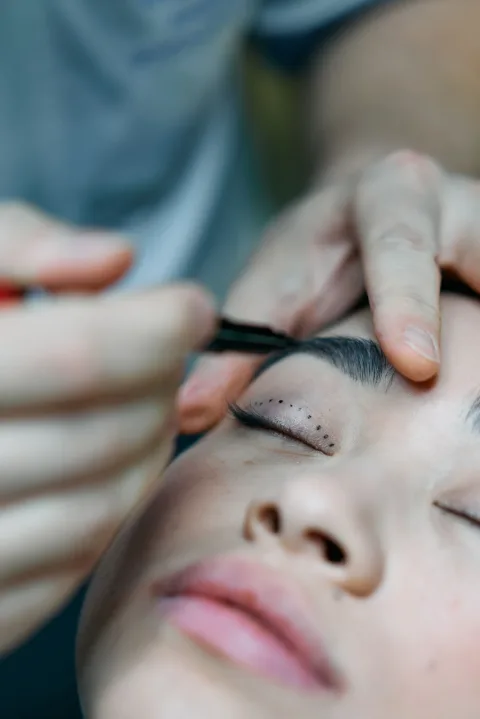
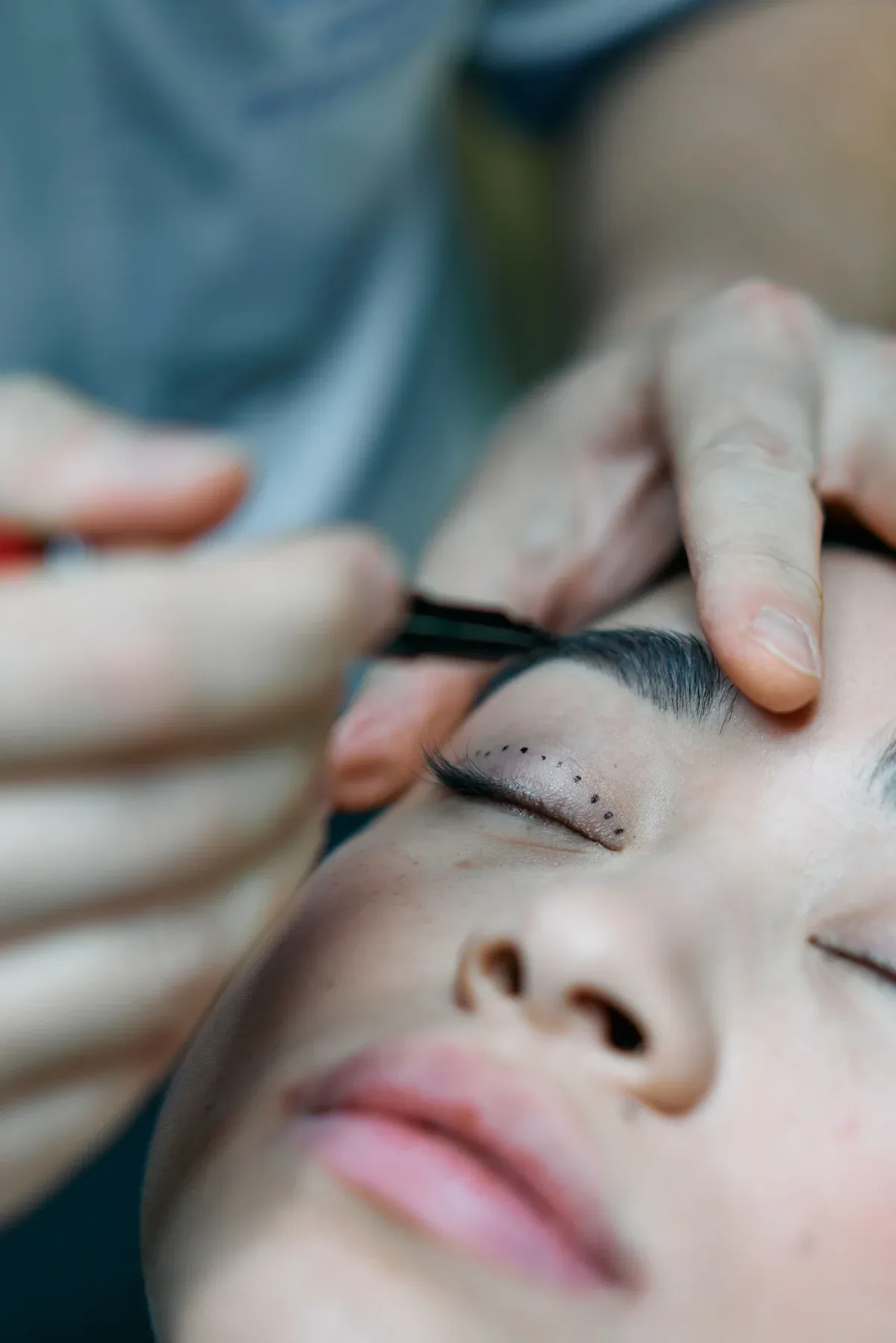
Incisions on the upper eyelid can be planned in relation to the natural lid crease. Through this approach excess skin and, if necessary, fat can be addressed. Placement of the incision within the crease does not mean there will be no scar. The Turkish Society of Plastic Reconstructive and Aesthetic Surgery information explains the relationship of the upper lid scar to the lid crease. In the surgical plan, preserving eyelid function is evaluated as carefully as how much tissue will be removed.
The initial appearance of both sides may not be identical. Discuss asymmetries found on examination and which differences may persist after the procedure. Do not assume that a fold you see in a photograph will form the same way on your face. Explain whether your expectation is related to a fold you notice only when applying makeup or to a daily sense of heaviness affecting your life. These descriptions help determine what changes are meaningful to you; suitability for surgery is not established by description alone.
Lower eyelid bags and hollowness
Lower lid bagging, excess skin and the lid–cheek junction appearance are evaluated together. The incision may be placed just below the lower lash line or, in appropriate cases, through the conjunctival side of the lid. Removal or repositioning of orbital fat pads may be considered. The transconjunctival approach does not remove skin. The ASPS procedural steps distinguish these methods. Which approach is appropriate is not determined solely by the size of the bag.
The statement “My under-eye area looks dark” should also be described in more detail during consultation. Color changes, shadowing or prominent bags may express different expectations. Ask what specific change the surgery aims to achieve; do not assume all causes of darkness will be eliminated by a single procedure. If fillers or other non-surgical treatments are mentioned during the consultation, do not treat them as merely another name for the surgery. You may consult the dermal fillers guide for general information about injection options and request an individualized assessment for your periocular area during the examination.
Ocular health and candidacy assessment
Dry eye, previous eye surgeries, current eye drops and known ocular diseases should be shared during the consultation. The Mayo Clinic blepharoplasty guide explains that medical history and ocular conditions should be discussed and necessary examinations and measurements performed. If there are visual complaints, the cause may need separate evaluation. Preoperative assessment is not limited to taking photographs or marking skin to be removed.
Bringing a list of your medications and eye drops to the first visit will help you share your history more clearly. If you have had previous injections, energy-based treatments or surgeries around the eyes, note the dates and any details you know. Do not withhold a complaint because you think it was temporary; the team will decide whether it is relevant to the assessment. Contact lens use, screen-based work and daily visual difficulties can also be discussed as separate items when organizing your questions.
Goals and methods are discussed together during the consultation
During the visit your general health, medications, allergies and previous procedures are assessed. The expected change and its limits should be discussed; the proposed method should be clearly explained. The ASPS consultation guide covers evaluation of the periocular area and explanation of risks. Telling the surgeon at the start which feature bothers you most ensures the discussion focuses on your priorities. You are not expected to learn all technical terms before the consultation.
You can prepare three brief headings for the consultation: the change you see, its effect on daily life and the difference you expect. For example, “I am bothered by the fold on my upper lid; I want to keep my eye shape the same” is clear. If you show a photograph as an example, say what you like about it. An example photo supports communication; it does not determine your surgical result in advance. If you do not understand the plan, ask the surgeon to demonstrate what they mean on your own periocular area.
Four stages of periocular evaluation
Separate the complaint
Describe excess skin, bagging, lid position and visual complaints separately. Share any previous procedures.
Understand the plan
Learn which of the upper and lower lids will be evaluated, the incision approach and the ocular examinations to be performed.
Prepare for care
Organize the eye drops, ointment, cleaning and follow-up instructions you are given. Plan transport and home support.
Follow recovery
Distinguish early swelling from the final appearance. Report new symptoms promptly; evaluate the outcome at follow-up visits.
Preoperative preparation and daily routine
Necessary tests and medication adjustments are determined by your personal health assessment. Smoking and nicotine use, supplements and products that affect bleeding risk should be discussed. The ASPS preparation guide also addresses transport and companion arrangements. Do not stop medications or eye drops on your own decision. Follow the plan agreed with the relevant physicians and the instructions provided by the hospital.
Consider your arrangements for the period after surgery. Identify someone who can help at home, the tasks you will need to resume when returning to work and how you will attend follow-up appointments. You may want to write down questions about screen work, reading or driving. Asking these separately rather than as a single “When will I be back to normal?” question will often get clearer answers. Do not transfer another patient’s recovery timelines directly into your leave or travel plans.
Recovery, bruising and periocular care
In the early period you may experience swelling, bruising, tenderness and dry eyes. Cold compresses, ointment or other care steps may be part of your personalized instructions. The ASPS recovery guide recommends explanation of medications, care, sutures, follow-ups and sun protection. Do not add a cosmetic product or a technique learned online that is not recommended for the periocular area. Make sure you understand the purpose of the care instructions you are given.
Returning to work and the final appearance are different stages. Being comfortable enough to attend a meeting does not mean all activities are appropriate. Ask about your personal plan for contact lenses, makeup, exercise and driving. When you attend a follow-up, describe when you first noticed a change, whether it has increased, and how it affects daily life. This way the question is not reduced to a single photograph; the changes you experienced are shared in a clear sequence.
Do not delay asking about unclear care instructions. If you are uncertain when to use a drop, how to handle a dressing, or the date of a follow-up, contact the team. Rather than classifying changes in your eyelid by social media comments, speak with the team that knows your surgery. If you are asked to keep a daily log, record observations in plain terms. You do not need to assign a medical label yourself or compare recoveries with other patients.
Scarring and long-term appearance
Incision placement can be planned in relation to the natural lines around the eye. However, scarless surgery or completely symmetrical results cannot be guaranteed. As swelling and bruising subside the appearance becomes clearer. The ASPS results guide explains that while results can be long-lasting, aging continues and additional surgery may be required in some cases. Assessing the result by the immediate postoperative photograph may confuse the different stages of healing.
When reviewing follow-up photographs consider head position, facial expression, lighting and shooting distance. Small differences can appear large when these conditions differ. Ask the team how images with your eye open or closed will be used. Progressing according to the goals discussed in consultation is more meaningful than comparing yourself with another person’s photograph. Features you want preserved and limits you accept remain the starting point for outcome assessment.
Risks and when to seek help
Potential risks include bleeding, infection, prominent scarring, dry eye, difficulty closing the eyes and lower lid eversion. Temporary or permanent changes in vision and, very rarely, vision loss should also be explained. The ASPS safety guide lists these risks. Learn how your personal risk is assessed and which team will follow you if a problem occurs. Risk information should not be limited to reading a form heading.
After surgery, request urgent medical assessment without delay for sudden vision loss or new severe eye pain. Do not wait for a routine appointment or an online response. For milder but new or worsening symptoms, use the communication plan provided by your team. Knowing out-of-hours contact information before surgery is therefore important. Discuss with your own team which problems can wait for a follow-up and which require earlier assessment.
Blepharoplasty price and scope of the procedure
Evaluation of the upper lid, lower lid and both together are not the same scope. An additional procedure, anesthesia and hospital services are also items that affect the quote. When price is discussed, learn which lids are planned for which purposes, the scope of follow-ups and services not included. Since there is no verified price list on this page, no figures are provided. The fee another person paid does not replace a quote based on your own examination findings.
To compare offers you can use several clear lines: treatment area, approach, hospital, anesthesia, follow-up and additional costs. Ask for clarification of terms you do not understand. A more comprehensive quote does not necessarily mean more procedures are required for your goal. Return to your priorities and reconsider which change you want. Asking for time to think and saying you are not ready yet is a natural part of the consultation.
Keeping consultation notes clear
You may hear many new words in a consultation. In your notes write the operation name, which lid is being evaluated and the next step on separate lines. If you do not fully understand a phrase the surgeon used, leave a question mark and ask for clarification rather than completing it with your own guess. This way, when you later search online you will not read about a different procedure as if it were your plan. If possible, ask for a diagram or written summary to help organize questions after the visit.
You do not need to record only technical details. The eye expression you wish to preserve, concerns related to your work, or the help you will need during recovery are equally clear items. Return to unanswered questions at your next visit. This method helps explain the issues important to you step by step instead of repeating the whole research process each time.
Frequently asked questions about eyelid surgery
Are the upper and lower lids operated on at the same time?
They can be evaluated together when appropriate; however, the needs and scope vary for each person. Learn separately what is being targeted for each area. Do not assume that changing one region necessitates surgery on the other.
Does eyelid droop correct with skin removal alone?
Excess skin, true eyelid droop and brow position can be different causes. Ptosis requires a separate evaluation and surgical approach. Learn in the examination which structure is related to your complaint.
Is every dark area under the eye a bag?
No. Color, shadowing, hollowness and bagging may be described similarly but are different targets. Ask which aspect surgery can address. Do not assume that all dark appearance will be completely erased by one procedure.
Does surgery change eye color or refractive error?
Blepharoplasty is not performed to change these targets. Visual complaints should be evaluated separately. If lid tissues affect the visual field, this should be explained in the personal examination.
Do I also need a facelift?
This is not mandatory. Facelift is a separate topic that addresses different areas and tissues. If combined planning is discussed, learn the rationale, scarring and recovery burden of each procedure separately.
Short preparation for the consultation
- Can I describe my upper lid, lower lid and visual complaints separately?
- Is my list of eye drops and previous eye procedures available?
- Is the distinction between lid, brow and ptosis clear to me?
- Do I know how I will receive care, activity and follow-up instructions?
- Is it clear which health service to contact for a new visual complaint?
After gathering your questions about the periocular area you can learn consultation options from the contact page. If you are looking for information about other facial regions, you can use the procedure discovery guide. Your goal may be limited to a single area; seeking information does not mean you have decided on procedures for your entire face.
What the procedure can address
Not every patient receives the same treatment; the points below may be considered together or separately, depending on the person:
- 01When assessing excess tissues and appearance of the eyelids, to prioritize preservation of the eye and maintenance of eyelid closure function. Perfection of symmetry or resolution of all periocular issues with a single procedure is not promised.
Who may be a candidate?
Who may be a candidate?
Dry eye, visual complaints, previous eye surgeries and current eye drops should be reported to the physician. An ophthalmologic evaluation may be requested if needed. Surgical decisions should not be based on photographs alone without assessment of lid position and closure.
New vision loss or significant ocular symptoms should not wait for a cosmetic appointment; appropriate medical evaluation is required.
The process
Which lid will be addressed, the tissue interventions planned, possible scars and anesthesia are explained during the consultation. Medications, bleeding history and prior procedures are shared. Postoperative eye care, follow-ups and return-to-daily-life planning are clarified in advance.
Results and realistic expectations
Early swelling may make the two sides appear different. Results are assessed as healing progresses. Skin aging continues; not all lines and color changes may be eliminated. Additional revision may be required.
Risks and limitations
Risks include bleeding, infection, noticeable scarring, dry eye, difficulty closing the eyes, lower eyelid eversion or retraction. Temporary or permanent visual changes and very rarely vision loss are possible. Anesthesia risks and the impact of existing ocular diseases are also part of the preoperative assessment.