What is Brazilian Butt Lift?
What is a Brazilian Butt Lift, what does it correct and what does it not?
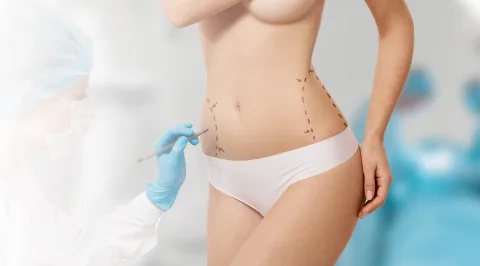
Brazilian Butt Lift (BBL) is an operation in which the patient's own fat, harvested by liposuction from the waist, abdomen or back, is processed and transferred to the buttocks. It is also searched for as Brazilian butt aesthetics or fat injection to the buttocks. The surgery has two effects: the donor areas become slimmer and the buttocks gain volume and roundness. Therefore, the result is seen not only in the buttocks but also in the transition between the waist and the buttocks.
Knowing what a Brazilian Butt Lift does not correct is important to set realistic expectations. Although the word "lift" is in the name, it does not remove sagging skin; a buttock lift is required for pronounced sagging. It does not remove cellulite or stretch marks. Because part of the transferred fat is resorbed, the volume seen in the first weeks is not the final volume. Bone structure and muscle shape also limit the result; the same amount of fat can look different on two people.
Which approach is considered according to the buttock goal?
The appropriate approach for the buttocks is selected based on whether the issue is lack of volume, skin sagging or fat distribution, not by the name of the desired result. The table below summarizes the general relationship between examination findings and commonly considered approaches; the personal plan is determined during the examination.
| Finding | Commonly considered approach | Note |
|---|---|---|
| Lack of volume in the buttocks, sufficient fat at the waist | Brazilian Butt Lift | Waist is slimmed, buttocks gain volume |
| Fat in the waist and back, sufficient buttock volume | Only liposuction | Fat is not transferred to the buttocks |
| Lack of volume in the buttocks, insufficient fat to transfer | Buttock implant or limited transfer | Specific risks are discussed separately |
| Sagging buttock skin after weight loss | Buttock lift, possibly combined with fat transfer | Leaves permanent scars |
| Depression at the side of the buttock | Limited fat transfer to this area | May be limited by bone structure |
Why is safety discussed separately in Brazilian Butt Lift?
Injection of fat into or below the gluteal muscle has been associated with passage of fat into large veins and the risk of fat embolism. For this reason, the joint safety statement of international plastic surgery societies emphasizes that fat should be placed only in the subcutaneous plane and that the cannula should not be directed into the muscle; ultrasound monitoring during transfer is also defined among these precautions. No method completely eliminates the risk. Op. Dr. Hasan Büyükdoğan explains during the examination which plane the fat will be placed into and how it will be transferred, the safe volume limit, and the course of action in case of a problem; please do not hesitate to ask about these topics.
What can be done in the same operation as a Brazilian Butt Lift?
Brazilian Butt Lift already includes liposuction; fat is most commonly harvested from the waist, abdomen and back. If there is excess abdominal skin after childbirth or weight loss, it can be planned together with a tummy tuck; in that case the fat obtained from the abdominal tissue to be removed can also be considered a source. Additional procedures increase operative time, clotting risk and recovery burden, so the necessity of each additional procedure and its impact on the recovery timeline are discussed individually during the examination; if necessary, procedures are staged.
What is different in men and in repeat Brazilian Butt Lift?
In men the goal is usually not a pronounced roundness but limited volume addition to the upper part of the buttocks and slimming of the flanks of the waist; the amount of fat available for transfer is often less. In patients requesting a second fat transfer, at least 6 months are waited for the fat from the first surgery to settle. In patients who have previously had permanent fillers or unknown substances injected into the buttocks, that situation is evaluated first; it is important to bring the name and date of the prior procedure to the consultation.
Where are the scars from a Brazilian Butt Lift?
Scars from a Brazilian Butt Lift consist of small millimetric entry points where fat is harvested and injected. These points are placed in natural lines such as the upper buttock crease, waist, umbilical fold and groin crease. Scars may appear dark in the first months and fade over time. When a buttock lift is added, a more extensive and permanent scar occurs at the upper buttock boundary; this scar is planned at the underwear line.
How to compare Brazilian Butt Lift offers?
When comparing Brazilian Butt Lift offers, look at what the offer includes and the safety plan before the total price. Two operations with the same name can differ greatly in the number of donor areas and transfer technique. Asking the following questions when requesting an offer helps you truly compare different proposals:
- From which regions will fat be harvested and how many regions are included in the offer?
- Into which plane will the fat be transferred, and will ultrasound be used during transfer?
- Who will perform the surgery, and are anesthesia and hospital fees included?
- How many nights in hospital; are compression garments, a sitting cushion, medications and follow-up visits included?
- If a problem occurs, which hospital and which clinician will provide care?
- What are the conditions for a possible second transfer?
BBL for purely aesthetic purposes is not covered by the public health insurance system.
If you are coming from another city or abroad
Op. Dr. Hasan Büyükdoğan's clinic is located on Bağdat Caddesi in Kadıköy on the Asian side of Istanbul. Patients coming from other cities or from abroad are usually advised to stay in Istanbul for 7–10 days after Brazilian Butt Lift so that initial follow-ups can be performed. Because direct sitting on the buttocks is avoided for the first 2–3 weeks, long bus or plane trips should be planned accordingly: the use of a support cushion, intermittent walking and thrombosis prevention are discussed in advance. Photographs can be shared securely for preliminary assessment; however, photos do not replace an in-person examination and the definitive plan is made face to face. Consultations can be conducted in Turkish, English or German.
What the procedure can address
Not every patient receives the same treatment; the points below may be considered together or separately, depending on the person:
- 01Volume deficiency at the lateral and upper part of the buttocks, flat-appearing buttocks
- 02Lack of a defined transition between the waist and the buttocks
- 03Depression at the side of the buttock (hip dip) appearance
- 04Fat deposits in the waist, abdomen and back that can be reduced in the same operation
- 05Volume difference and asymmetry between the two buttocks
Who may be a candidate?
Who may be a candidate?
Brazilian Butt Lift is considered for patients who want a change in buttock volume or shape, have sufficient fat tissue for transfer from the waist, abdomen or back, are in general health suitable for surgery and have a stable weight. It is important that the buttock skin has elasticity and limited sagging. Patients who can stop smoking, can comply with the sitting restrictions in the early weeks and have realistic expectations are better candidates.
Who may not be suitable?
- Insufficient fat tissue available for transfer
- Ongoing smoking or nicotine use that cannot be stopped before surgery
- Uncontrolled diabetes, cardiopulmonary disease or coagulation disorders
- Marked sagging of the buttock skin (a buttock lift may be required)
- Expectation of volumes exceeding safe limits or prior injection of permanent fillers into the buttocks (requires separate evaluation)
Brazilian Butt Lift is not a simple filler procedure; using the patient's own fat does not make the procedure risk-free. More volume does not necessarily mean a better result; the transferable amount is determined according to safe limits.
The doctor's examination approach
The examination looks beyond appearance to the person's overall anatomy and expectations. Key points assessed:
- Amount of fat at the waist, abdomen and back
- Volume distribution and projection
- Elasticity and sagging of the buttock skin
- Definition of the transition
- Right and left buttock difference
- Recent changes in weight
- Prior injections and surgeries
- Target shape and safe limits
The process
During the examination the buttocks are evaluated from the front, side and back; potential donor areas and the condition of the buttock skin are examined. Standard photos are taken for planning. It is clearly discussed which areas the fat will be harvested from, which part of the buttock the fat will be transferred to, that the fat will be placed in the subcutaneous plane rather than into the muscle, the anesthesia plan and the postoperative sitting/lying arrangements. Preoperative blood tests and, if necessary, an anesthesia evaluation are performed.
-
1
Examination and photography
Buttock shape, potential donor areas and skin condition are examined and expectations are discussed.
-
2
Personalized plan
Donor areas, transfer sites and the safe volume limit are determined.
-
3
Preparation
Tests are completed; instructions about smoking, medications and supplements are given, and compression garments and a support cushion are prepared.
-
4
Surgery
Usually lasts 2–4 hours under general anesthesia; fat is harvested by liposuction, processed and transferred into the subcutaneous tissue of the buttocks.
-
5
First night in hospital
Patients lie prone or on their side; early ambulation is started and thrombosis prevention is applied.
-
6
Follow-ups
Donor and recipient areas are monitored with scheduled follow-up visits; sitting restrictions are updated during follow-ups.
Technique and medical approach
The method depends on the patient; no single technique suits everyone. Main points considered:
| Approach | Description |
|---|---|
| Fat harvesting by liposuction | Fat is removed from the waist, abdomen, back or thighs with small cannulas. This stage both provides fat for transfer and slims the waistline. |
| Fat preparation | Harvested fat is separated from blood and excess fluid and prepared for transfer. The goal is to deliver viable fat cells to the buttocks. |
| Transfer to the subcutaneous plane | According to current international safety recommendations, fat is placed only into the subcutaneous plane and not into or beneath the gluteal muscle. This aims to reduce the risk of fat reaching large vessels within the muscle. |
| Ultrasound-guided transfer | During transfer, ultrasound can provide real-time visualization that the cannula tip remains in the subcutaneous layer. International safety statements describe this approach as a risk-reduction measure. |
| Assessment with buttock lift or implant | If there is significant sagging of the buttock skin, fat transfer alone is not sufficient; for patients without enough fat to transfer, an implant can be discussed as an alternative. |
Preparing for the procedure
The points below are general information and do not replace personal medical instructions. Your own preparation is set at the examination.
Recovery
-
0–1 day
First day
One night in hospital; lie prone or on the side, wear a compression garment and begin short walks.
-
2–7 days
First week
Swelling and bruising are most pronounced. Direct sitting on the buttocks is avoided; the first follow-up is performed.
-
2–3 weeks
First weeks
Sitting restrictions continue; most people return to desk work with a support cushion in 2–3 weeks.
-
4–8 weeks
First two months
Compression garment is generally discontinued at 4–6 weeks; return to heavy exercise is allowed after 6–8 weeks with physician approval.
-
3–6 months
Months
Some of the transferred fat is resorbed and the remaining fat settles; final volume and shape become clear.
After Brazilian Butt Lift, patients commonly experience aching and tenderness in donor areas and a feeling of tightness in the buttocks in the first weeks; pain is usually controlled with prescribed medications. Extended pressure on the buttocks should be avoided to support nourishment of the transferred fat. If you notice unilateral leg swelling, fever, increasing pain or any discharge, contact the surgical team without waiting for the scheduled appointment; in case of sudden shortness of breath, chest pain, fainting or change in consciousness call 112.
Results and realistic expectations
The result of Brazilian Butt Lift becomes clear over 3–6 months as swelling subsides and the transferred fat settles: the waist appears slimmer and the buttocks fuller and rounder. A portion of the transferred fat is resorbed in the early months; the settled fat behaves like the body's other fat tissue and is affected by weight changes. Therefore, no exact permanence rate is provided and some patients may require a second transfer.
Risks and limitations
The risks of Brazilian Butt Lift are explained before surgery according to the individual's health status. The most serious risk is fat entering the large veins in the gluteal muscle, traveling to the lungs (fat embolism) and potentially being life-threatening. Therefore, placing fat only into the subcutaneous plane is a fundamental safety principle; no precaution completely eliminates the risk.
- Passage of fat into the circulation (fat embolism) and embolization to the lungs
- Greater-than-expected resorption of transferred fat, volume loss and asymmetry
- Failure of fat tissue to survive (fat necrosis), induration and oil cysts
- Fluid or blood accumulation under the skin (seroma, hematoma), infection
- Contour irregularities and numbness in donor areas
- Need for revision or a second transfer
- Anesthesia-related risks
Alternative and complementary options
In some cases other methods may be considered. Each has its own limits and is not right for everyone:
| Method | Description |
|---|---|
| 1Gluteal implant | Can be considered to increase volume in patients without sufficient fat for transfer; there is no fat harvesting and it carries its own risks such as infection and implant displacement. |
| 2Buttock lift | Removes sagging buttock skin after weight loss; it does not increase volume and leaves permanent scars. |
| 3Shaping with liposuction alone | Reducing fat from the waist and back can make the buttocks appear more prominent; it does not add volume to the buttocks. |
| 4Exercises targeting the gluteal muscles | Can change muscle volume and shape to some degree; does not change fat distribution or skin quality. |